Accountants for Solar Panel Installers
Written and reviewed by the Solar Installer Accountants editorial team. Last reviewed 22 August 2026.
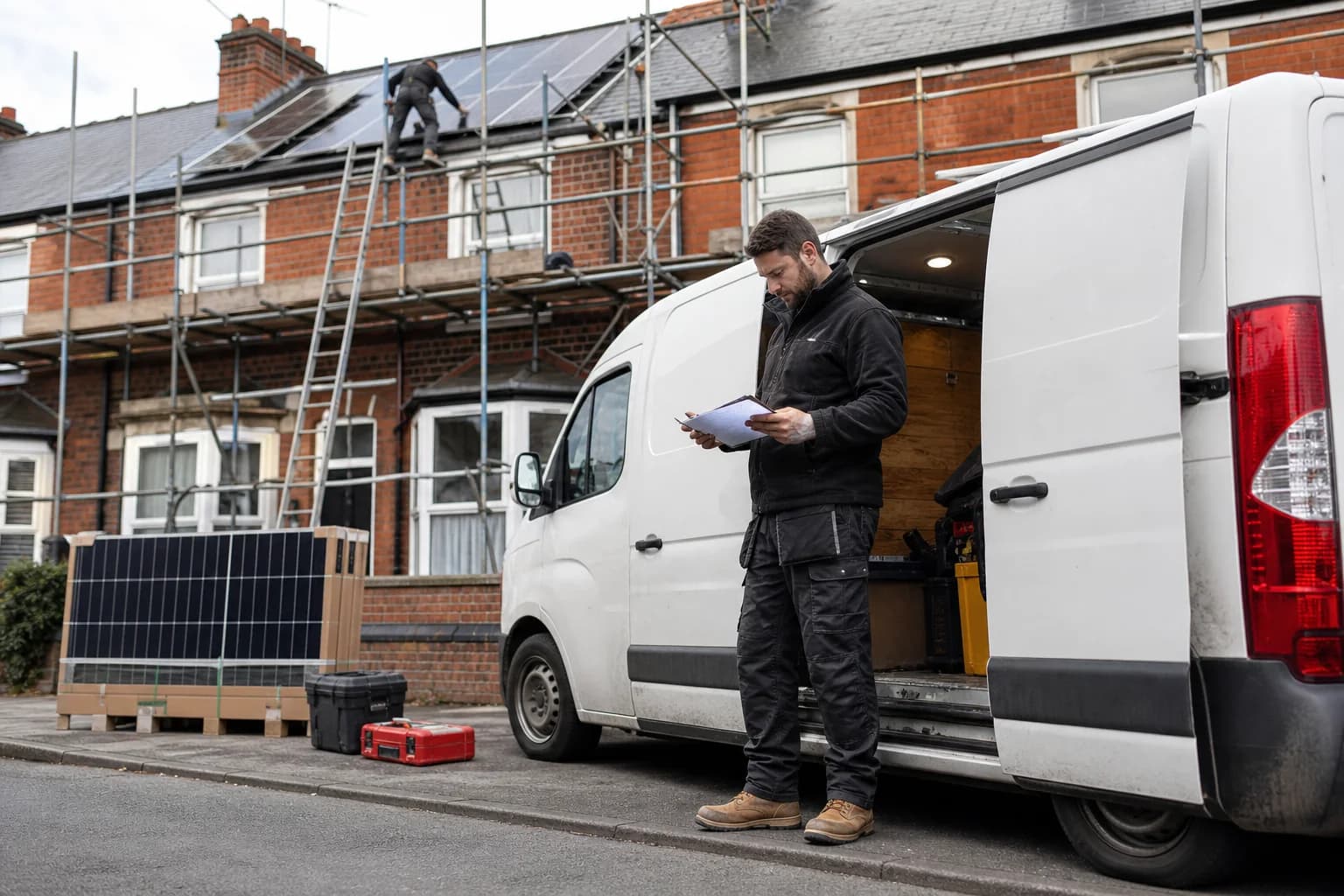
We act for self-employed solar installers: the tax return, the bookkeeping behind it, and the VAT decisions you make when you quote rather than when the return falls due. One firm that understands how a fitting business is actually paid and what it costs to run.
Everything is a fixed fee, agreed in writing before any work starts. No hourly billing, no charge for a question, and nothing taken until you approve the quote.
What We Handle
Registration with HMRC, your Self Assessment return, and the records that support it. Where you are VAT registered we handle the returns and, more usefully, the decision behind them: whether a given job is zero-rated or standard-rated, which turns on the building rather than the work.
Alongside that, the claims. Van, tools, test equipment, height access, protective wear, and the training and certification you pay for to keep working. Where you have bought something substantial we check it against the right capital allowance rather than defaulting to the obvious one.
Where a Solar Installer's Tax Is Different
An ordinary sole trader charges one VAT rate. You charge whichever rate the building attracts, and you are the one who has to work that out at quoting stage. Get it wrong upward and you have overcharged a customer. Get it wrong downward and the VAT comes out of your margin, because you cannot usually go back and add it.
The second difference is timing. The zero rate on domestic installs ends on 31 March 2027 and becomes 5%. Any quote you write now that will be completed after that date needs pricing for it, and that is a conversation worth having before you sign the job, not after.
How It Runs
You send your sales invoices, purchase receipts and bank data in one go rather than a chain of texts. We do the work, show you the numbers before anything is filed, and submit once you are happy. Anti-money-laundering identity checks come first, as at any UK firm.
Take just the annual return, or the bookkeeping and VAT returns through the year as well. For most installers the second works out better, because it puts someone on the VAT question while the quotes are still being written.
What It Costs
A fixed fee, quoted before we begin, based on what your situation needs. A sole trader doing domestic installs with tidy records is at the lower end. Add VAT returns, CIS, or a mix of domestic and commercial work and it costs more, and we tell you which you are before you commit.
To get a price, tell us about your solar work and we will come back with a fixed quote and a deadline.