Capital Allowances on Solar Installations
Written and reviewed by the Solar Installer Accountants editorial team. Last reviewed 22 August 2026.
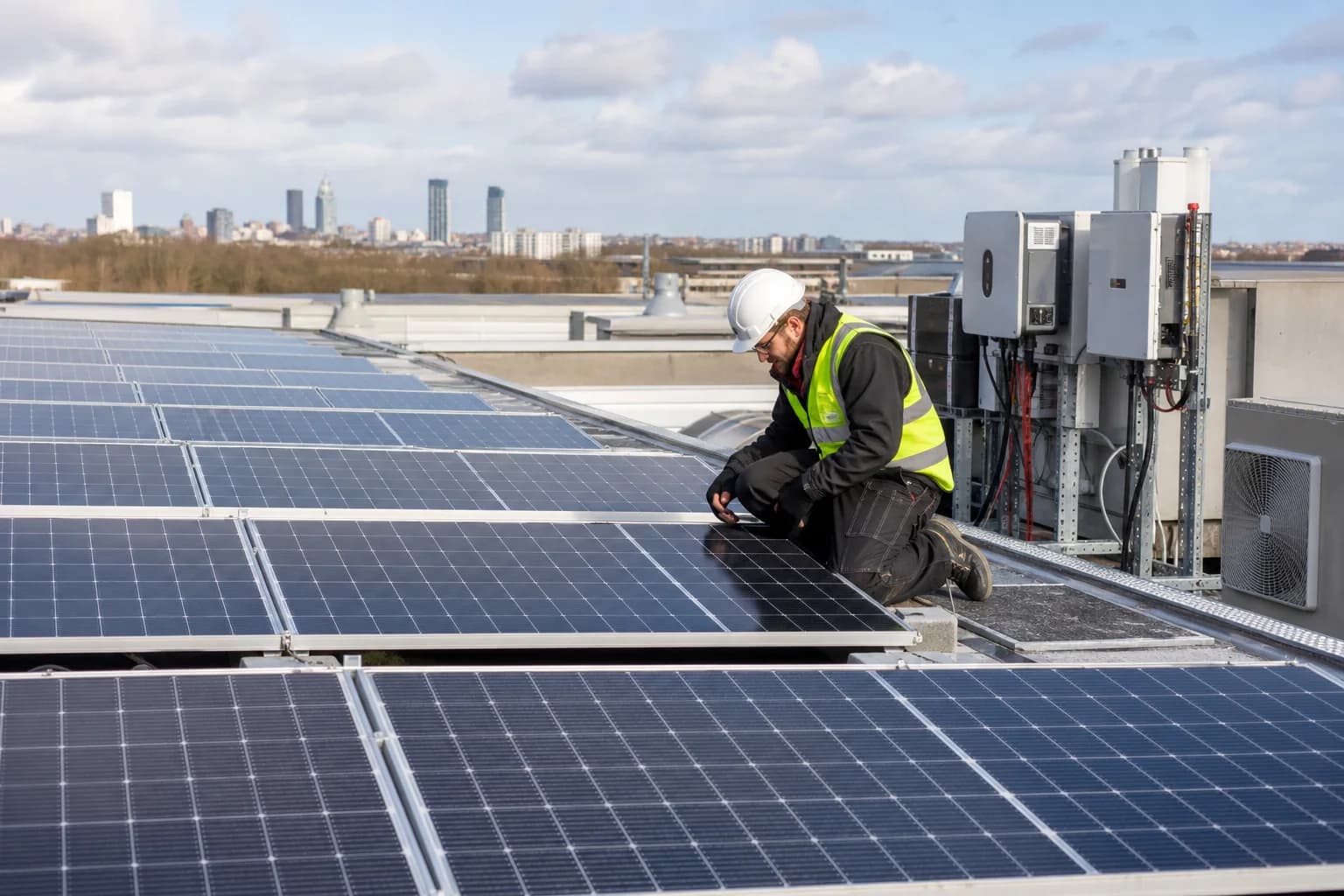
There is a specific mistake in this area that is repeated confidently across the industry, including by people selling solar on the strength of it: that a company buying an array can write the whole cost off in year one under full expensing. It cannot. Solar panels are excluded from full expensing by their classification, not by argument.
What follows is what solar actually qualifies for, why the classification exists, and which route leaves a business best off depending on how it is structured.
Solar Is Special Rate Expenditure
Capital spending on plant and machinery falls into a main pool or a special rate pool, and the pool determines the relief. Solar is not a borderline case that gets argued either way. All capital expenditure on the provision of solar panels is specifically designated as special rate expenditure by section 104A of the Capital Allowances Act 2001, with effect from 1 April 2012 for corporation tax and 6 April 2012 for income tax.
The designation covers photovoltaic systems that generate electricity and solar thermal systems that provide hot water. Before it was introduced, the same result was usually reached by treating the panels as integral features or long-life assets, so the classification confirmed existing practice rather than changing direction.
Once expenditure is in the special rate pool, writing-down allowances run at 6% a year rather than the 18% that applies to the main pool. On a large system, relieved purely through the pool, that is a long tail.
Why Full Expensing Does Not Reach It
Full expensing is a 100% first-year allowance for main rate plant and machinery. Special rate assets are outside it by design, and HMRC's guidance names solar panels among the assets that cannot be claimed under it, alongside integral features and assets with an expected life of at least 25 years.
What a company gets instead is the 50% first-year allowance for special rate expenditure. Half the cost is relieved in the year of purchase, and the balance goes into the special rate pool to be written down at 6%. Both full expensing and the 50% allowance were made permanent, and both are available only to companies within the charge to corporation tax.
That last point is worth stating plainly, because it is the second half of the same misconception. A sole trader or a partnership cannot claim full expensing or the 50% first-year allowance at all, whatever the asset is.
The Annual Investment Allowance Is the Route That Works
The Annual Investment Allowance gives 100% relief in the year of purchase on up to £1 million of qualifying expenditure, and unlike full expensing it does reach special rate spending. HMRC's capital allowances manual is direct about it: it may be claimed on long-life assets, integral features and other special rate expenditure as well as on general plant and machinery.
It is also available to sole traders and to partnerships whose members are all individuals, not only to companies. For most solar businesses, and for most of their customers buying a commercial array, the AIA is therefore the better first question, and the 50% first-year allowance is the fallback for a company that has already used its AIA elsewhere in the year.
You can allocate your AIA against whichever expenditure you choose. Where a year contains both main rate and special rate purchases, pointing the AIA at the special rate items first is usually right, because what is left behind then writes down at 18% rather than 6%. That is a decision made when the return is prepared, and it is the sort of thing a solar company's year end should be checking rather than defaulting.
Where This Comes Up in Practice
Two situations, and they are different. The first is your own capital spending as an installer: vans, tools, test equipment, scaffolding, and any demonstration array on your own premises. Vans and tools are ordinary plant and go through the AIA in the normal way. The array on your own roof is special rate, and lands exactly where this guide describes.
The second is your customers. A commercial customer buying a rooftop system is making a special rate purchase, and the relief they get shapes the payback figure in your proposal. Quoting a payback built on full expensing overstates the year-one benefit, and if the customer's accountant catches it after the contract is signed, that is a difficult conversation you did not need. Getting it right is a selling advantage, not just a compliance one.
Where grant funding is involved, the qualifying expenditure is reduced by the grant, so relief is claimed on what the business actually bore. That interacts with the VAT treatment of the same job, since capital allowances are claimed on the cost net of any VAT a registered business recovers.