MCS Certification Cost for Solar Installers
Written and reviewed by the Solar Installer Accountants editorial team. Last reviewed 22 August 2026.
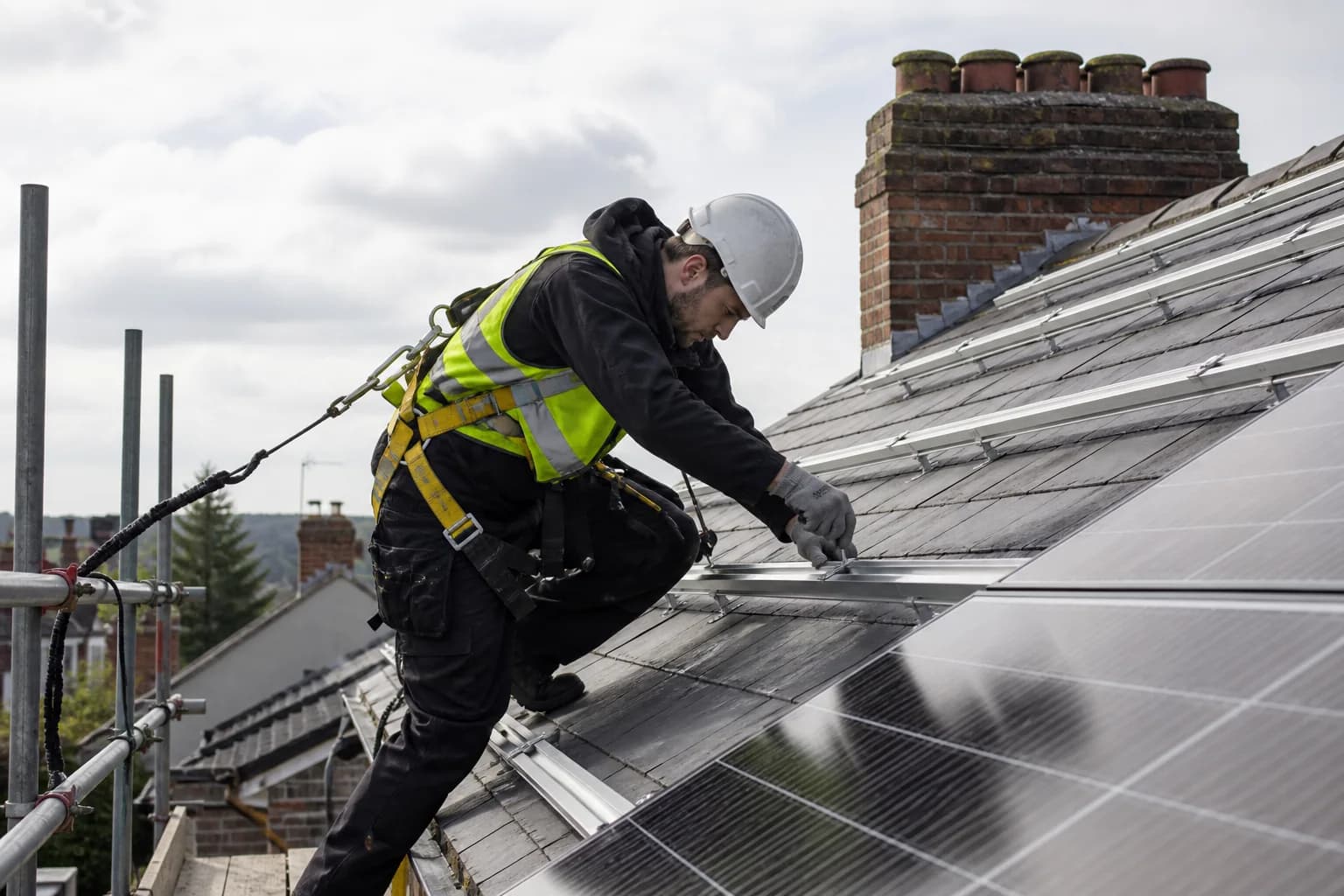
There is no published price list for MCS certification, and that is worth understanding rather than treating as a gap in your research. MCS sets the standards; the certification bodies licensed to assess against them set their own fees. Two installers certifying for the same technology in the same month can pay materially different amounts.
So this is not a page with a number on it. It is what the spend is made of, what drives it up or down, and how each part lands on your tax return.
What You Are Actually Paying For
The cost is not one fee, it is a stack. There is an application and assessment charge from your chosen certification body, covering the audit of your quality management system and a review of installations. There is an ongoing annual surveillance charge to stay certified. There is a registration fee each time you register a job with the scheme. And there is the qualification and training spend for the people doing the work, which for most new entrants is the largest single line.
Sitting alongside that are the things certification assumes you already have: electrical competence registered with a competent person scheme, the right insurance, and in many cases consumer code membership. Some certification bodies bundle several of these into one annual figure, which makes headline comparisons between quotes misleading unless you check what is inside each one.
Because the fees are commercial and body-specific, the only reliable way to budget is to get two or three written quotes covering the same scope. MCS lists the certification bodies it licenses, and the scope you ask them to price should name every technology you intend to install, because adding one later is usually a separate charge.
How the Spend Is Treated for Tax
Annual surveillance charges, scheme membership and per-installation registration fees are recurring costs of trading. They are ordinary revenue expenses and come off your profit in the year you incur them, in the same way as your other subscriptions.
The initial certification charge is the one people ask about, on the theory that it buys something lasting. In practice certification is a renewable permission that lapses if you stop paying and stop passing audits, rather than an asset you own, and it is normally treated as revenue on that basis. Where a business has capitalised something in this area it is worth looking at properly rather than assuming, because the answer follows the specific facts.
Training is the line with a real rule attached, and it is not the one most people expect.
The Training Rule Catches People Out
HMRC's test for training is about the business area, not about the qualification. Training that updates or extends the skills of an existing business is revenue expenditure and deductible. Training that lets you start a new business, or move into an unrelated area, is not.
For a working electrician adding solar PV, the training generally sits inside the existing trade and is deductible on that basis. For someone with no trade at all, training to qualify as an installer is what allows the business to start existing, and that is a much weaker position. The practical consequence is that the same course can be deductible for one person and not for another, decided by what they were already doing.
HMRC publishes a tool for checking where a particular course falls, and it is worth running before you commit rather than at the year end. If you are certifying before you have started trading at all, the timing question is dealt with when setting the business up.
What the Certification Buys Commercially
Certification is not a tax relief and it does not change what you charge. It does not affect your VAT rate: the zero rate on a domestic install turns on the building, not on your accreditation.
What it buys is access. A solar PV installation up to 50kW has to present an MCS certificate or equivalent before the customer can claim under the Smart Export Guarantee, and most grant routes take the same line. An uncertified installer is not doing anything wrong, but is selling into a smaller market at a worse price, and that is the number to weigh the fees against rather than the fees on their own.
If you are VAT registered, the fees carry VAT you can recover in the normal way, so compare quotes net of VAT rather than on the headline.